
Welcome to my first Let’s Talk Bookish entry in a while!
This week’s prompt is: Happy Pride! What are your favourite books with LGBTQIA+ representation? Are there authors or series you always recommend? What books are on your Pride Month TBR? What do you think makes representation feel genuine?
Since it is, in fact, Pride Month, and I’m yet to do a post about it (mostly because I haven’t posted very much this month), I definitely wanted to do this prompt. I do have at least one more pride-related blog post planned for later in the month, but for now, let’s take a look at some of these questions.
Let’s Talk Bookish is a weekly meme originally created in 2022, and now co-hosted by Aria @ Book Nook Bits and Dini @Dini Panda Reads. You can find out more here and follow Aria and Dini’s blogs to see the new topics posted quarterly. Find all of this quarter’s prompts here.
What are your favourite books with LGBTQIA+ representation? Are there authors or series you always recommend?
I’m not going to give a full answer to these questions, because I plan on doing a longer post dedicated to LGBTQIA+ book recommendations later in the month, but I thought I would share some go-to authors.
I think one that probably a lot of people would jump to (me included) is Becky Chambers – if you’re into science fiction, you can rest assured that any Becky Chambers book will be *full* of diverse LGBTQIA+ representation. Becky Chambers is also considered an Own Voices author.
And in the YA space, I remember really enjoying Jandy Nelson’s I’ll Give You the Sun, and the author has at least one more novel that is marked “LGBTQIA+” on StoryGraph (out of three total), so that could be a good option if you prefer something more contemporary/realistic fiction.
For more recommendations definitely stay tuned for my full-length recommendations post later in the month.
I will say that I’ve got a fair few recommendations for gay/lesbian characters and non-binary characters, but not as many for other identities, so I would love some recommendations!
What books are on your Pride Month TBR?
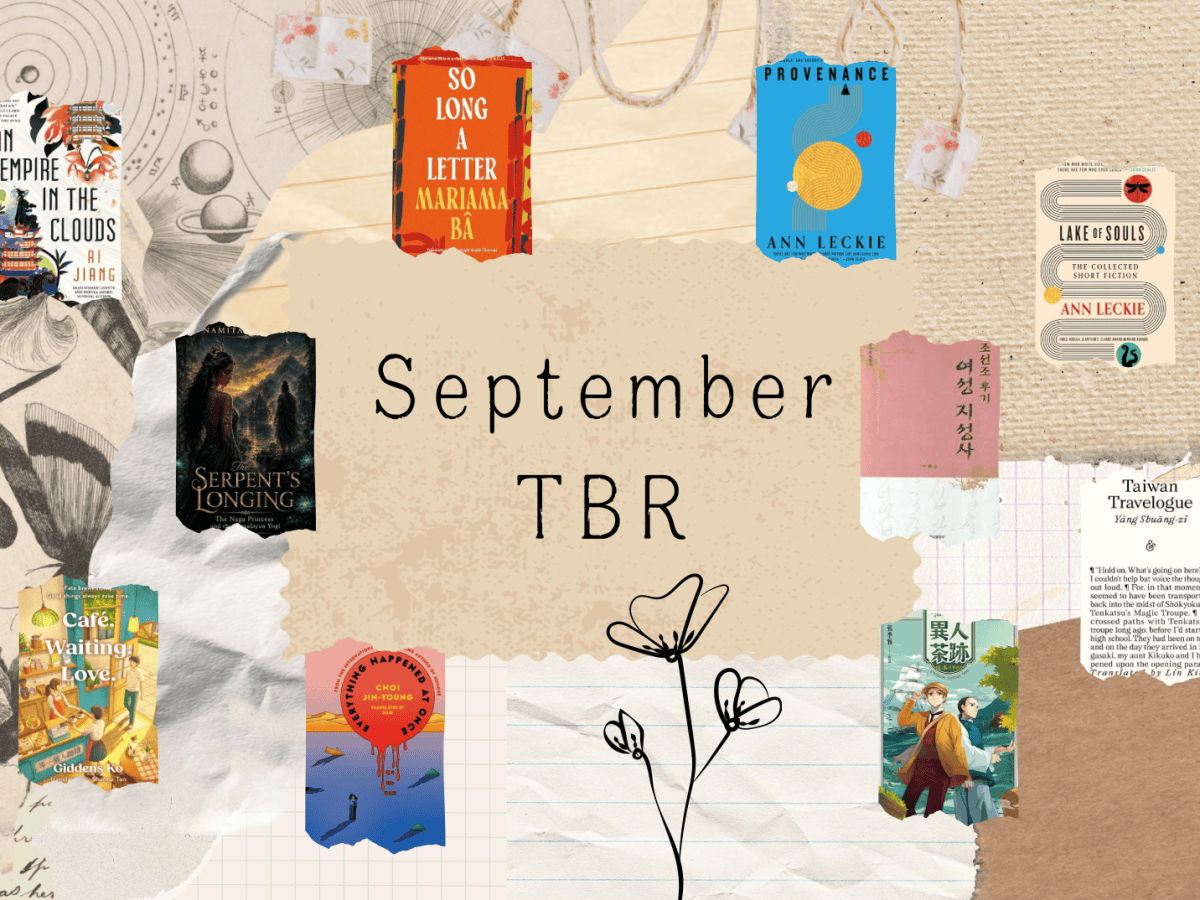
I didn’t actually make my TBR this month specifically with Pride in mind (I’m pretty bad at doing season/event-specific reading anyway, and I had quite a lot of things I needed to slot into my TBR this month). However, I think that almost makes it more interesting to see what LGBTQIA+ representation made into my TBR anyway without me doing it deliberately.
And I’m pleased to see that there are a couple of books on there that I think count!
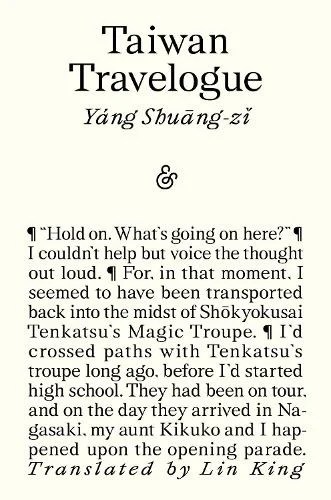
First up, we have Taiwan Travelogue by Yang Shuang-zi, the most recent International Booker Prize winner. The novel follows a Japanese tourist in Taiwan during the Japanese colonial period, and her local interpreter. It’s set up as a translation of a ‘discovered’ manuscript (which is now translated into English – so many juicy levels of translation) and deals a lot with issues of colonialism etc. through the sapphic love story between the Japanese tourist and her Taiwanese interpreter. I do also love that we’re getting a sapphic story in a historical fiction novel set in Taiwan, especially as Taiwan was the first Asian country to legalise same-sex marriage in 2019.
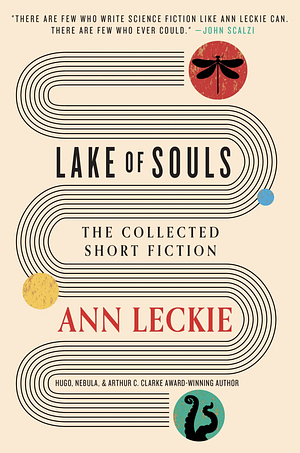
Apart from that, we also have the Lake of Souls short story collection by Ann Leckie. Although it isn’t marked specifically as LGBTQIA+ on StoryGraph and I haven’t read it yet so I don’t know specifics on representation, the greater Imperial Radch universe which three of the stories are based on features a wide array of gender identities and cultural conceptions of gender, including a lack of gendered pronouns (using exclusively “she”) in the dominant culture and (perhaps as a result of this) features many queer relationships. I can only imagine this carries into the short stories as well.
Finally, I have read a couple of danmei* books already this month – they weren’t on my TBR but I read them when I was London since I took a little wonder into Forbidden Planet and came out with goodies. I don’t necessarily think that danmei is the *best* representation of LGBTQIA+ in literature, however I do think it has an important role and, if done well, can be good or at least important representation. The two novels that I picked up and have already read were the first volume of The Wife Comes First and Golden Terrace.
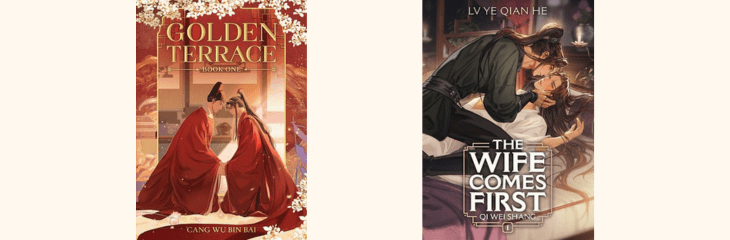
Interestingly, both of these are set in fictional historical Chinese periods where marriage between two men is legal (at least to some extent), and is used as a way to limit power of powerful officials by denying them ‘legitimate’ heirs (as they can then only have biological heirs from concubines, who wouldn’t be legitimate). I think this can provoke some really interesting discussion about conceptions of homosexuality in historical periods (especially as some Chinese emperors were famously into men), as well as the negative effects of sexism.
*Danmei: A category of Chinese literature (and especially web novels) that focus on romantic relationships between male characters. Wikipedia classifies these relationships as “homoerotic” as the characters don’t always necessarily identify as gay, and the explicitness of the relationships (as in, how clear it is that they are in a relationship) can vary depending on series, censorship etc. The audience of these books is traditionally considered to be primarily adult women. Stories about love between two women are called “baihe”, although fewer of these have official English translations – you can find some fan translations online though. Baihe has a separate history to danmei and is generally considered to have a less specific target audience.
I will say that I found the sexism in these books (especially in The Wife Comes First, not really in Golden Terrace) to be far more problematic than any of the representation of the relationships, and actually thought the relationships were portrayed very interestingly, with a variety of implied sexualities. For example, the main character in The Wife Comes First is mostly only interested in his female concubines in the first life, and resents his male “wife” (legitimate spouse, here translated as ‘wife’), mostly because he was forced to marry him by the Empress who hates him. When he finds himself in peril, though, his concubines abandon him and only his ‘wife’ stays by his side, so when he finds himself waking up on the night of his wedding he decides to be completely dedicated to his ‘wife’ in this life – and he’s clearly attracted to him. So potentially bisexual? And in Golden Terrace, there is a bit of a rivals-to-lovers element, and again an arranged marriage, but it is clear that one of them identifies specifically as gay whilst the other doesn’t necessarily.
The lack of sexual violence (mostly) in these two books did make feel happier about the representation, and Golden Terrace in particular contains a lot of historical fiction/fantasy politics – although there is a strong romantic element, the characters have lives and personalities outside of each other, and I think that’s important for making representation feel genuine and not just like fantasy fulfilment for straight women (a common criticism).
What do you think makes representation feel genuine?
I guess that partial discussion of whether danmei books can count as ‘good’ representation leads pretty well into this question.
I think genuine representation comes from creating fully-developed characters. I don’t think there is one right way to write a character of a certain gender or sexual identity, just like I don’t think there is one right way to write a female character, for instance. However, there is definitely a wrong way – that is, writing a flat, one-dimensional character that only exists for the plot (or other characters) to move around. If you write your characters as humans who also happen to be gay or bisexual or non-binary etc. then I think you have a good chance of the representation feeling genuine (or at least not downright offensive).
I do also think getting some basic facts right would probably be a good idea, and an attentiveness to some of the debates or common stereotypes surrounding certain identities can help address (or avoid) these with sensitivity and intention rather than accidentally, unknowingly, or unthinkingly reinforcing what might be harmful stereotypes.
Keira x


 Keira's Bookmark