

Nonfiction November is a month-log blogging and reading event hosted by some excellent nonfiction book bloggers: Heather @Based on a True Story, Frances @Voltatile Rune, Liz @Adventures in reading, running and working from home, Rebekah @She Seeks Nonfiction and Deb @Readerbuzz. Each week a different host provides a blogging prompt and will post a linky so everyone can go and read each other’s posts!
If you missed my previous Nonfiction November posts, check them out:
![[Review] An Apology for Idlers by Robert Louis Stevenson](https://keirasbookmark.com/wp-content/uploads/2025/11/screenshot-2025-11-21-at-10.18.41.png?w=800&h=600&crop=1)
This week’s theme is “diverse perspectives” and is hosted by Rebekah @She Seeks Nonfiction. Rebekah asks, “Is there a book you read this year from a diverse author, or a book that opened your eyes to a perspective that you hadn’t considered? How did it challenge you to think differently?”
I’m not going to talk about a specific book, but rather a collection of books that I’ve been dipping in and out of for the past couple of years. I’ll definitely read all of them from back to front at some point in my life, but I haven’t needed to do so for them to give me a huge range of new perspectives on the world. That is the Classical Chinese philosophical canon!
If you’ve ever read (or thought about reading) Plato or Socrates or something like that – or even if you haven’t – I highly recommend trying some of these Chinese classics. You can buy some great annotated translations or you can find the texts in English for most of them free online as well, so it’s a pretty accessible range of books even if you only want to dabble.
I’m going to attempt to answer three key questions today:
- Why should I read classical Chinese philosophy?
- What books should I read?
- How should I read them? How can I make sure I understand them?
I am a Bookshop.org (UK) affiliate. If you purchase through Bookshop UK (support independent bookshops!) using one of my links I receive a small commission. This does not affect the price you pay.
Why should I read classical Chinese philosophy?
A lot of people have probably heard of Confucianism, or maybe Taoism – even if you don’t really know what it is or what it means. Other people might think they know what it is, but have never really engaged with the source materials. In fact, there’s a much greater variety of Classical Chinese philosophy than just Confucianism or Taoism – even if those are the most well-known.
Origins of Classical Chinese philosophy
What these different philosophies have in common is that they all originate in a period called the “Hundred Schools of Thought Period” (c. 6th-3rd Century BCE). This was a very turbulent period of Chinese history with lots of small states and rulers trying to take each other over and general social chaos. As a result, lots of philosophers (and philosopher-advisers as many of them became) started to think about the best way to live, and especially the best way to rule and organise society.
Of these many schools of thought, perhaps the most influential or well known are Confucianism, Taoism, Legalism and Mohism (this latter being the most neglected of the four – despite being one of my personal favourites). If you’re interested the Wikipedia article on this period is actually pretty decent.
Common ideas and traits of Classical Chinese philosophy
- Share some common metaphysical ideas about how the world works – although they differ in their application and interpretation of these principles.
- Share similar concerns that make their philosophy quite practical – many offer advice for moral self-cultivation, the best way to live one’s own life, and above all how to rule (or not rule) a society in the best way possible.
- Often use analogy and anecdote rather than logical analysis to argue their points, which in my opinion makes them a bit easier to follow than a lot of Western philosophy, and also roots their philosophies in everyday life.
- Deal largely with moral or ethical philosophy – they’re not so much asking why the world is the way it is (or indeed, what is said ‘way’ of the world) but what is the right way to live in said world. This means that reading these books can make you think about how the philosophical assumptions you make in your own life affects your relationships, work, and even your country or culture!
Reasons to read Classical Chinese philosophy
Now, that’s all well and good but let me give you a couple of concrete examples of why you might want to take the time to read classic Chinese philosophy.




- The first reason is perhaps the most obvious one, and I’m guessing the reason most people (including myself) want to read Chinese philosophy – to better understand Chinese culture, and especially Chinese history or premodern society.
This one is kind of obvious – the philosophies of this time period have an immense impact on the formation of Chinese society and even the ruling practices of both imperial and contemporary China. It also has a huge impact on social norms and conventions today, especially in the family, so even if you’re only interested in modern China, I still highly recommend giving the classics a read! - On a similar note, if you’re interested in contemporary Chinese culture or politics, or international relations, you should definitely be reading Chinese philosophy.
Contemporary politicians often quote or reference ideas from these classics when talking about modern decisions – Chinese philosophy is really heavy on the whole “how to rule your country” thing. Importantly, it’s not enough to just know that so-and-so politician makes references to such-and-such a philosopher – sometimes they might refer to one philosopher whilst actually basing their policies more concretely in a different philosophy all together. Familiarity with the classics can help you spot these patterns and understand Chinese politics and international relations on a deeper level. - Learning about Chinese philosophy can also help us better understand our own cultures and other cultures that aren’t Chinese. (Same goes for politics, history etc.) After all, there’s a good chance that we see the world on the basis of certain philosophical assumptions and understandings about how the world works that are specific to our culture – whether we’ve read the texts that form those ideas or not, it’s simply what we’ve been taught to understand and see in the world.
Reading classic Chinese philosophy gives you an alternative perspective that can help you question your own ideas – and even better, it gives you multiple alternatives born from the same social conditions – which shows how the same situation can have multiple possible answers and reactions. This helps us develop important critical thinking skills! - Just as reading diverse perspectives can help broaden and deepen our understanding of the world around us, it can help us understand ourselves better as well.
Giving yourself the time and space to think about how you agree or disagree with certain philosophical arguments – especially the kind with the ethical and moral impetus that Chinese philosophy has – can help you develop and grow as a person by challenging your ideas and thus allowing you to either develop, change or solidify your understanding of yourself and the world around you. - They’re actually kind of fun to read! I like to add my own little arguments in the margins too – sometimes I really disagree with what they’re saying.
What books should I read?
Now that I’ve hopefully at least somewhat convinced you to maybe give reading classic Chinese philosophy a go, the obvious next question is – what do I read?
Luckily there is a pretty well-defined canon, which is even more well-defined in English since only the absolute most canonical, important works get translated (as a general rule). Luckily, there are still enough translations to give you a taste of the four major Schools of Thought. Sometimes there are even lots of different translations for you to choose from – either chose the one your local bookshop has, or spend hours on a deep dive through Reddit forums to decide which is the best version for you. Your choice! (I have done both and therefore own multiple copies of many of these books 😅)
Here’s a quick overview of the key works I’ll be talking about today:




Below I will introduce the key texts to read for each of the four main schools of thought!

Confucianism:
Confucianism is all about rule by morality (and not law), including: respect for social hierarchy and adhering to proper ritual as was done during the Western Zhou (11th-8th Century BCE). A moral King and a moral government make for a moral country.
The key text to read is The Analects, which is a collection of Confucius’ teachings. I particularly like this new translation because it includes useful annotations.
I wouldn’t just stop there though – there is a great deal of internal diversity within each of the schools of thoughts, and a very long history of reinterpretation and innovation within the schools as well. Another major work for Confucianism is Mencius, written by Mencius – probably the second-most influential Confucian scholar. Very interesting if you’re interested about the morality of human nature – are we good or evil?
I won’t get into the Neo-Confucian canon as that is less well-translated (although very influential), but if you’re interested in how Confucianism applied to women – and maybe in how ideas changed over time – you can check out The Confucian Four Books for Women, which collates four of the most important Confucian texts written by women for women from the Han to Ming dynasties (1st-15th Century CE).
Daoism/Taoism:
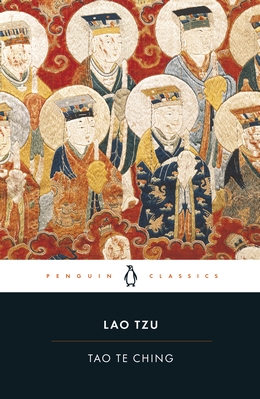
Daoism has the biggest pop culture presence in the West (anyone seen those Daoism Winnie-the-Pooh books?) but I actually think it’s the hardest to understand. Generally speaking, it’s all about learning to live according to the flow of nature and the world rather than trying to shape it. The most important text to read is the Tao Te Ching (or Daodejing), written by Laozi (the guy who started the school).

The translation I linked above is considered the more ‘academic’ one (more literal a translation), but if you want something a bit more accessible – with a more modern translation (not abridged though!) and larger, clearer font, I highly recommend this version instead.
You should also probably read Chuang Tzu (or Zhuangzi). If you’ve ever heard the story of a man who woke up from a dream where he was a butterfly and wondered if he was a man dreaming he was a butterfly or a butterfly dreaming he was a man – that’s Zhuangzi. He’s a bit later than Laozi, but writes in a more prose-like style so perhaps slightly more accessible.

Legalism:
The most comprehensive and representative legalist text is written by Han Feizi (3rd century BCE). It has a lot in common with concepts like realism (or even Machiavellian) ideas about statehood. Han Feizi teaches rulers to rule an amoral, interest-driven people through consolidation of power, punishment and the rule of law.
Mohism:
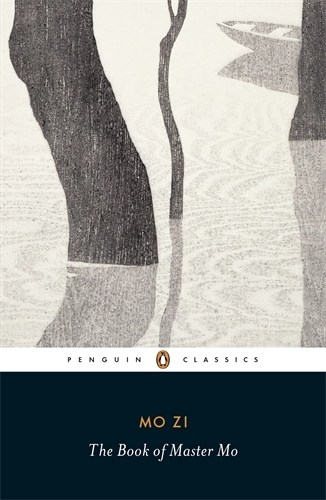
Last but certainly not least is Mohism – my favourite, if the one I’ve studied the least. The key defining characteristic is the concept of “universal love” – a universal, unbiased respect and concern for all people regardless of their relationship to you. Isn’t that a beautiful idea? The one to read here is The Book of Master Mo, or there is this thematically organised collection of some of the book’s key teachings.
How should I read them? How can I make sure I understand them?
Okay, so you know what the texts are, but how do you understand them? You can just go ahead and read them, but they make lots of references to assumed knowledge and people and it can be a little confusing if you have no background to know what the moral of the story is – what are they trying to say?
Reading them in translation ironically helps with this because modern English leaves much less room for interpretation than Classical Chinese and the people doing these translations do a lot of research of the hundreds of commentaries on these texts from the last two millennium to figure out what meaning to translate.
Many of the translations will also include annotations, commentary or an introduction – I highly recommend you read these. But if you want a bit more, you can try looking at some nonfiction books about Chinese philosophy as well as just reading the philosophical texts themselves.



The book that my Chinese philosophy professor made us read was History of Chinese Philosophy, edited by Bo Mou. If you don’t mind a massive and quite academic text with 1-2 chapters on each of the schools, this really is a great resource. It also covers all of the schools of thought mentioned here and more! [Note: I have linked a new copy here, but I recommend buying secondhand or borrowing if possible as it’s a bit pricey.]
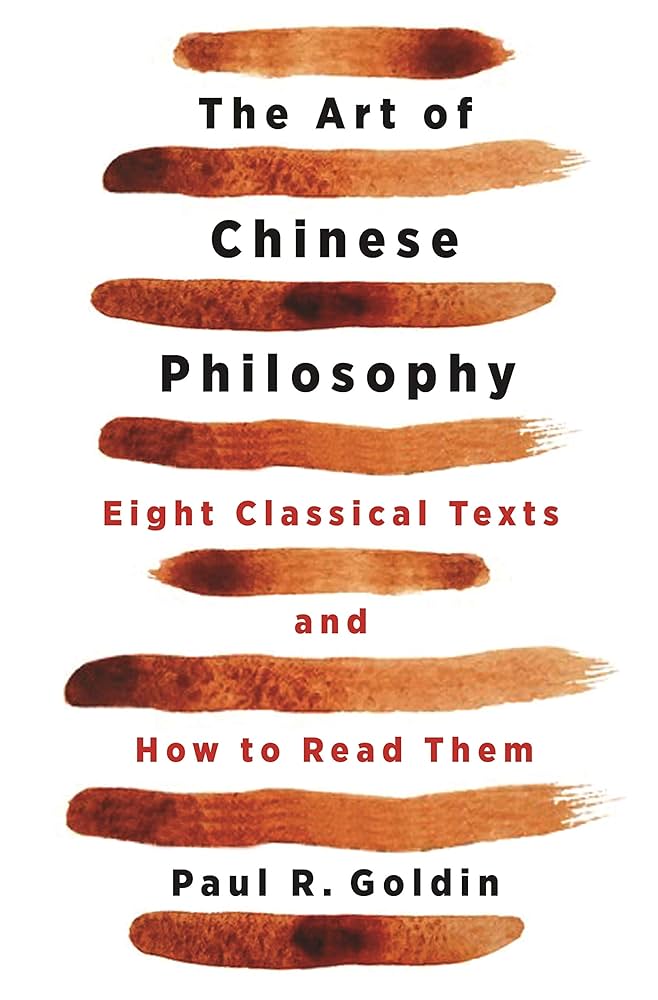
Another alternative that looks more specifically at the texts rather than the schools themselves is Paul R Goldin’s The Art of Chinese Philosophy – I haven’t read this one myself yet but I’ve got my eye on it. It’s also slightly shorter (360 pages) whilst still covering all the main texts I’ve talked about there. [The new copy is also far more affordable.]
If you’re specifically interested in Confucianism, there is a Very Short Introduction to Confucianism, which is (obviously) short and assumes no prior knowledge, so that could be a great start.
And if you’re interested in how we can use Confucianism today or fit it into our world (a hopefully less hierarchical, less sexist world), then a book like Chenyang Li’s Reshaping Confucianism: A Progressive Inquiry – currently on my own TBR – might be the place to look!
There are lots of other books on Chinese philosophy too, though, so don’t let yourself be limited by the four suggestions I’ve given here, and of course there are plenty of resources on the internet as well.
I’ve armed you the best I can in a 2k-ish word blog post, so go forth reader and explore the world of Chinese philosophy. If this post inspired you to pick up one of these books (or even just add them to your TBR), please tell me – I would love to know!
Or maybe, which of the schools of thought seems most up your alley?
Finally, are there any other books that you think offer an important opportunity to rethink how we approach the world? Whether you agree with what they have to say or not, I’d love to see what other books are instrumental in shaping the way we view the world.
Keira x
P. S. This was a bit of a long one, so thank you if you stuck with me to the end! All the love ❤


 Keira's Bookmark