
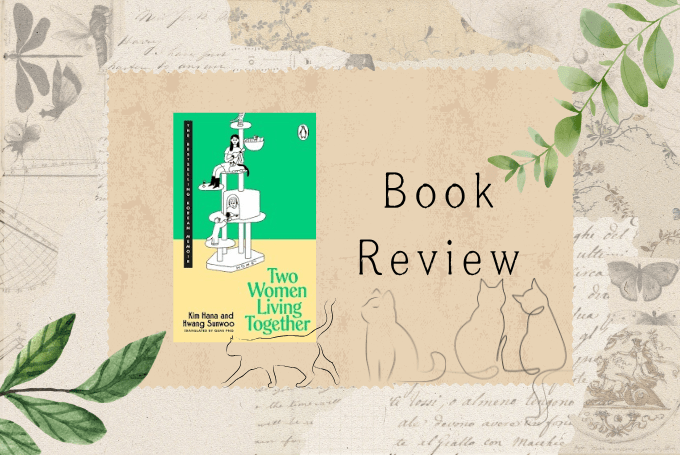
Two Women Living Together by Kim Hana and Hwang Sunwoo
(여자 둘이 살고 있습니다) Translated by Gene Png
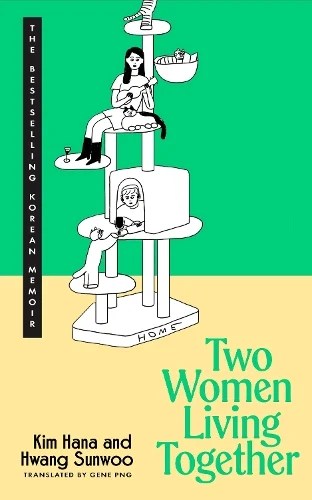
2019 [EN: Jan 2026] | Nonfiction – Memoir | Korea | 256 pages
At some point between living alone and becoming single, Hwang Sunwoo and Kim Hana found each other, and decided to live together in a nice apartment where their four cats would finally have the freedom to run around. Together they became a family – and redefined it.
At a time when housing costs have skyrocketed whilst the birth rates plummets, these two independent Korean women in their late forties share their views on society and its expectations of them. And, intent neither to marry nor to live alone, they reflect on the comfort of their cohabiting friendship as it blossoms into a life full of joy and meaning.
From housing insecurity and access to health care, to solo dining and stigmatised cat ladies, the loaded, self-sacrificing demands of filial piety and obligations to in-laws, Two Women Living Together impugns social scripts by spelling them out plainly. But also, and especially, by showing what it’s like to choose differently.
Quietly radical, full of warmth and wit, Two Women Living Together celebrates carving out your own path, cats, female friendship, and a different kind of family.
Two Women Living Together is a memoir translated from the Korean by Gene Png that follows alternating perspectives of two middle-age Korean women who decided to buy a house together. It appears that whilst the book was published in 2019, a few more chapters have been added for the translated edition to update the readers on the impact of COVID and their more recent pursuits, which is an interesting approach.
Content
I’ll talk more about the translation later, but let’s first talk about the content! The book starts with the process of them coming to live together and then focuses largely on the lessons they have learnt living together about family and coexisting with another human (and many cats), as well as their individual careers and joint creative pursuits.
Some common topics include:
- adjusting to different living patterns and expectations
- conflict resolution
- cats (they have 4!)
- hobbies like books, sports, shopping, and cooking/food
- family, friendship and local community
They also make many references to various media they have produced outside of the book when talking about their jobs, including a music playlist, a podcast and another book they have since written in Korean (no translation yet, but we can hope)! This could have felt like forced self-promotion but I actually really enjoyed it, especially since things like the playlist and podcast are available immediately and for free; it only served to deepen my immersion in the book.
I’m yet to listen to a full episode of the podcast since they’re over an hour long, but I listened to the beginning of the most recent episode, and it directed me to episode 173 as a ‘guide’ to the podcast, so I plan on listening to that next time I’m walking somewhere. The podcast is, of course, in Korean, but the playlist is accessible for everyone! It’s called “Hawaii Delivery” and you can find it on both YouTube and Spotify. It’s supposed to be a chill drinking backing track, but I think it could work well as a reading playlist as well!
Although most of the book is about their personal experiences, I did appreciate that they do briefly mention the legal and social issues faced by non-traditional families in Korea (and of course, across the world), including people living long-term with a partner, friend or anyone else who is not biologically or legally related to them. This wasn’t the focus of the book, but not mentioning it would have felt dismissive of the issue and I thought it provided a good grounding and context for the memoir that made it feel more genuine and realistic. This is especially important as they frequently mention a future where such nontraditional setups become more and more common.
Structure, Writing and Translation
This was my first time reading a memoir that alternated between two different POVs but it worked quite well. I was buddy reading this with a friend, and after the first 20% or so, she worried that the book was a little bit repetitive and I do agree that it starts a bit repetitive since we get both authors’ perspectives on the same events a lot. They’re interesting and different perspectives, so it’s okay, but it would have been grating if the whole book were like that. After about a quarter of the way through the book, though, the structure started to work better. The authors took turns writing about connected themes but separate events, so there was a good balance between cohesion and momentum.
The writing style throughout is engaging and accessible. There are a few interesting metaphors and quotable sections, but generally the tone is plainer and reads like a (grammatically correct and well-structured) conversation with a friend. There was also a good balance between extremely relatable moments and moments where I felt like I could learn something new or implement a lesson in my own life.
“…in the face of an encroaching deadline, people like to expend their energy on anything but the task at hand…”
I think the translation was really well done – to the extent that I had a look to see what other books Gene Png had translated. Png kept in some of the linguistic quirks of Korean and she did a really good job translating and explaining discussions about Korean terminology so that it felt like they were always intended to be communicated to a non-native audience, without removing the culture and clever word-play that is smattered throughout the memoir. Most importantly, the translation doesn’t read as a stilted, obvious translation – I only paid so much attention to it since I work as a Korean-English translator myself!
Impact
Two Women Living Together definitely made me think critically about how I interact with the people I live with and how to build a sense of community in the area I live – something I wanted to try and make an effort to do when I next move… not much point doing it where I am now, since I’ll be moving at some point in the summer.
Despite the general vibe of the memoir being cosy and comforting, I did cry a little twice towards the end. There were some beautiful comments about fried, which I think is what got me – I find that I rarely cry at a death, but I cry very easily and readily at somebody else’s grieving. Make of that what you will.
Verdict

In conclusion, this book gets a very high four stars, and I highly recommend it for anyone who likes:
- memoirs in general
- Korean literature or Korean culture
- books or cats
- found family dynamics and other nontraditional ways of living
- anyone who read this entire review (well done!)
Buy this book!
I am very passionate about supporting authors, libraries, independent bookshops and generally any bookshop that isn’t Amazon! Therefore, I will always try and make it as easy as possible to buy books from sources that aren’t Amazon by providing links. Bookshop.org UK links are affiliate links that help support indie bookshops as well as myself without affecting the price you pay. Delivery is UK-only, but US-based customers can also check out Bookshop.org US. All other links offer international shipping, but please also consider supporting your local bookshop or library!
Have you read this book? If so, what did you think? If not – is it going on your TBR?
Keira x

 Keira's Bookmark